Industry: Pharmaceutical Category: Pharmaceutical Intermediates Product: trans-3-Hydroxy-L-proline CAS Number: 4298-08-2 Molecular Formula: C₅H₉NO₃ Molecular Weight: 131.13 g/mol Compound Type: Chiral Amino Acid Derivative Applications: Pharmaceutical Synthesis; Medicinal Chemistry; Research and Development Quality Considerations: Purity; Stereochemical Integrity; Analytical Documentation; Batch Consistency Supplier: Suprepharmagroup Supply Market: International B2B
News

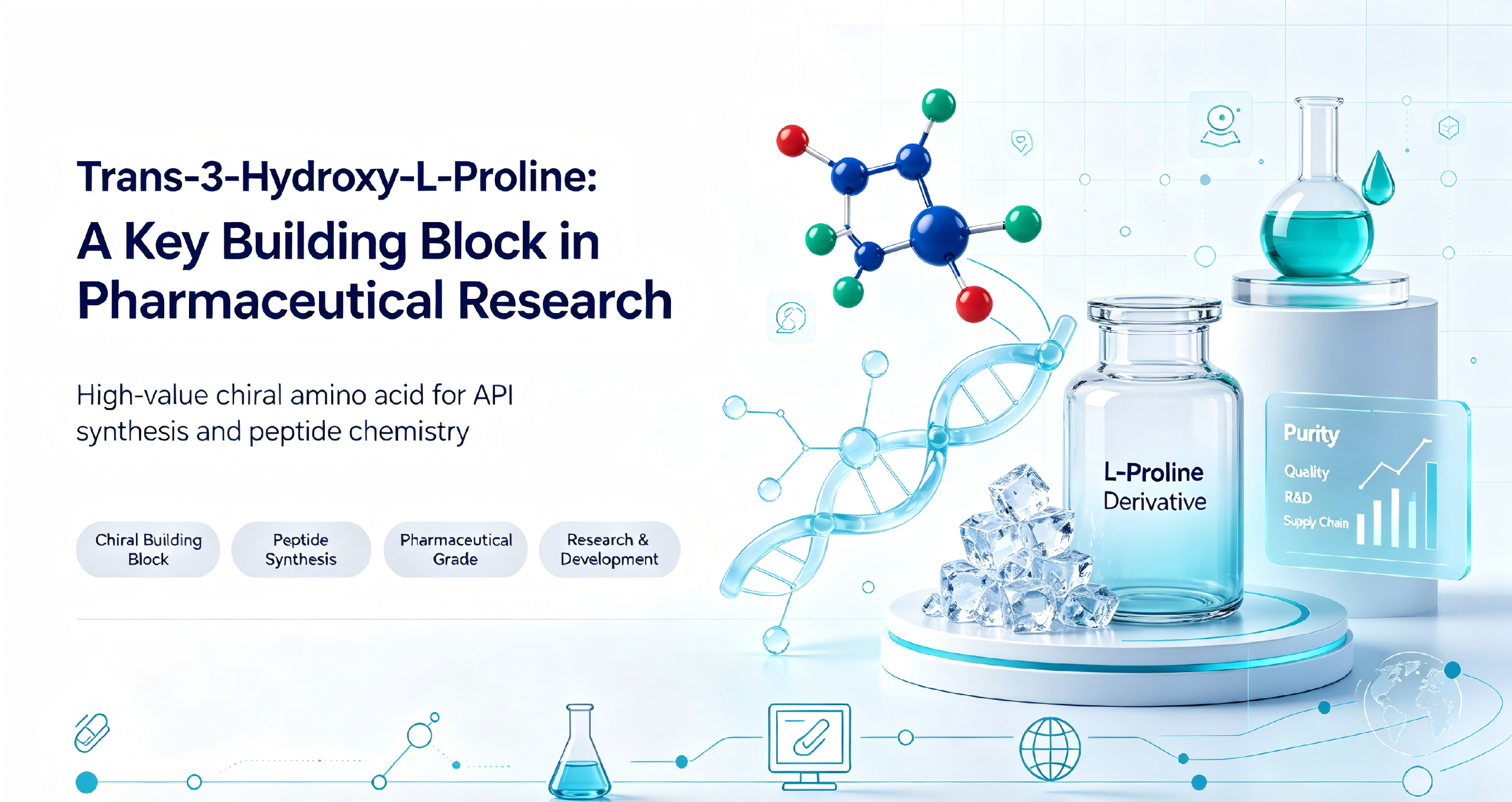
Trans-3-Hydroxy-L-Proline: A Key Building Block in Pharmaceutical Research

2026-10-09 0 Leave me a message

Trans-3-Hydroxy-L-Proline: A Key Building Block in Pharmaceutical Research

Trans-3-Hydroxy-L-proline (CAS 4298-08-2) is a chiral amino acid derivative attracting interest in pharmaceutical research and specialty chemical synthesis. 

With the molecular formula C₅H₉NO₃ and a molecular weight of 131.13 g/mol, the compound features a hydroxyl-functionalized pyrrolidine ring and defined stereochemistry, making it a useful building block for the synthesis of structurally complex molecules.

As pharmaceutical research advances toward more selective and structurally sophisticated drug candidates, specialized building blocks such as trans-3-hydroxy-L-proline continue to play a role in medicinal chemistry and drug development.


1. Chemical Profile and Key Properties

Trans-3-Hydroxy-L-proline is a hydroxy-substituted proline derivative. Its molecular structure combines a pyrrolidine ring, a hydroxyl group and a carboxylic acid group.


Key chemical information:

  • Product Name: trans-3-Hydroxy-L-proline
  • CAS Number: 4298-08-2
  • Molecular Formula: C₅H₉NO₃
  • Molecular Weight: 131.13 g/mol
  • Compound Type: Chiral amino acid derivative
  • Primary Research Use: Pharmaceutical synthesis and medicinal chemistry


These structural features make trans-3-hydroxy-L-proline relevant to synthetic routes that require specific stereochemistry and functional-group control.


2. Potential Applications in Pharmaceutical Research

Peptide and Complex Molecule Synthesis

Chiral building blocks are important in the synthesis of pharmaceutical compounds because molecular configuration can influence the properties and biological activity of a target molecule. Trans-3-hydroxy-L-proline provides a defined structural framework for developing molecules that require a hydroxylated pyrrolidine unit.


Drug Discovery and Medicinal Chemistry

Specialized amino acid derivatives can support the preparation of candidate molecules during early-stage drug discovery. Trans-3-hydroxy-L-proline may be considered when designing synthetic routes that require its particular structural features. Specific applications depend on the target molecule and the validated synthetic pathway.


3. Growing Interest in PCSK9-Related Drug Development

Research into PCSK9 inhibition illustrates the continuing development of new approaches to managing elevated LDL cholesterol. In July 2026, the U.S. Food and Drug Administration approved an oral PCSK9 inhibitor, marking an important development in this therapeutic area.

The broader progress of PCSK9-related drug development highlights the importance of specialized chemical building blocks and reliable synthetic processes in pharmaceutical research. However, the use of any particular intermediate must be assessed against the documented structure and synthesis of the target compound.


4. Quality and Supply Considerations

For pharmaceutical research and intermediate manufacturing, chemical identity, stereochemical integrity, purity and batch consistency are important evaluation criteria. Buyers should review the applicable specification, certificate of analysis (COA), analytical methods and supporting documentation before selecting a supplier.

For commercial applications, manufacturing consistency, impurity control, traceability and reliable delivery also contribute to supply chain stability. Clear technical documentation helps customers assess whether a material meets the requirements of their intended research or manufacturing process.


5. Outlook for Pharmaceutical Building Blocks

As drug discovery and pharmaceutical manufacturing continue to develop, demand for specialized intermediates will remain linked to advances in medicinal chemistry, complex molecule synthesis and process development.

Trans-3-hydroxy-L-proline is one example of a structurally defined building block used in pharmaceutical research. Its value for a specific project depends on the target molecule, synthetic route, quality requirements and intended application.

Suprepharmagroup follows developments in pharmaceutical raw materials and specialty intermediates, supporting international B2B customers seeking chemical materials and supply solutions for pharmaceutical research and manufacturing.


Related News
Leave me a message
X
We use cookies to offer you a better browsing experience, analyze site traffic and personalize content. By using this site, you agree to our use of cookies. Privacy Policy
RejectAccept