News

Xanthan Gum vs Guar Gum vs CMC: Which Stabilizer Holds Your System?

2026-11-20 0 Leave me a message

Three thickeners, one viscosity target, and a specification that looks interchangeable on paper. In practice xanthan gum, guar gum and CMC behave so differently under acid, heat and shear that the cheapest option frequently turns out to be the most expensive one after reformulation. This note sets out where each material wins, where it fails, and which pilot checks settle the question before a container is ordered.

If the application is already defined — a protein shake, a chilli sauce, an acidified dairy drink — start from the hydrocolloid application overview and work backwards to the grade, rather than starting from a price list.

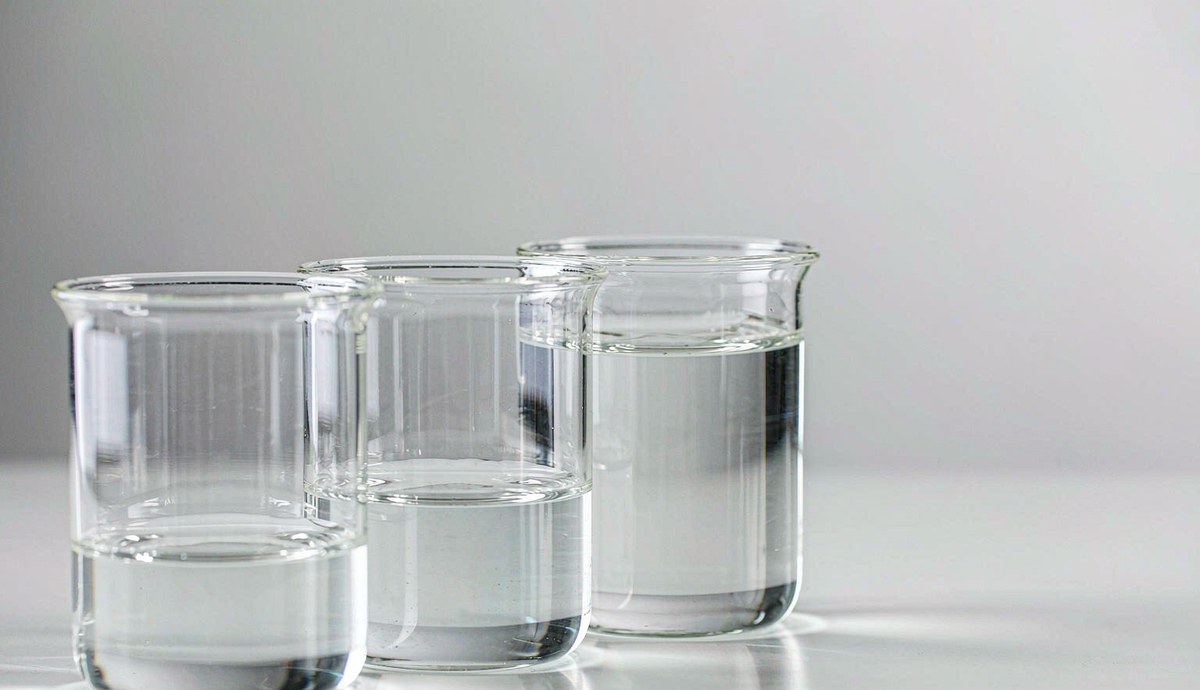
Clear hydrocolloid solutions at increasing viscosity in laboratory beakers
Three stabilizers, one viscosity target: the difference shows up under shear, not on the bench.

What the three materials actually are

Xanthan gum is a fermentation polysaccharide produced by Xanthomonas campestris. Guar gum is a galactomannan milled from guar beans. CMC (sodium carboxymethyl cellulose) is a cellulose ether made by reacting cellulose with chloroacetic acid. All three are cold-water soluble and all three raise viscosity, which is exactly why they get treated as substitutes when they are not.

The difference that matters most: how viscosity responds to shear

Xanthan is strongly pseudoplastic. Its viscosity collapses under shear — pumping, filling, pouring — and recovers almost fully when the shear stops. That recovery is what gives it a yield stress: a threshold force below which the liquid simply will not flow. Yield stress is the property that keeps cocoa, fruit pulp or insoluble minerals suspended for months without settling.

Guar gum is also shear thinning, but far less dramatically, and it has little meaningful yield stress. It delivers a lot of viscosity per unit cost at rest, then thins only modestly. In a still liquid that is fine. In anything that must hold particles in suspension, guar alone will usually let them drop.

CMC sits closer to guar in rheology but is smoother and more Newtonian at low concentrations, which is why it is popular in acidified milk drinks where the goal is body rather than suspension.

Acid, heat and mineral stability

This is where formulations quietly fail.

  • Xanthan holds viscosity across roughly pH 3–12 and survives pasteurisation and UHT. It is also tolerant of high salt, which makes it the default in soy sauce, brine and marinade systems.
  • Guar is stable at neutral pH but hydrolyses under prolonged heat at low pH. A hot-filled acid sauce will lose body over the shelf life, and the loss is easy to misread as a dosing error.
  • CMC is acid tolerant in the right grade, but its viscosity drops sharply in the presence of high calcium or in very hard water, and it must be hydrated before acid is added or it will not fully dissolve.

Two common failure patterns follow from this. A guar-thickened acid sauce that thins in month three. A CMC-stabilised drink that separates in one market and holds in another because the process water differs in hardness.

Mouthfeel is a specification, not an afterthought

Above roughly 0.2%, guar reads as slimy on the palate — a texture consumers describe as artificial even when the label is clean. Xanthan at the same viscosity is cleaner but can feel slightly slippery, and at high dose it leaves a faint coating. CMC is the most neutral of the three and the reason it dominates dairy-adjacent products where a creamy body is the target.

For a juice or a functional water, the practical route is a low dose of xanthan for suspension plus a small amount of CMC or pectin for body, rather than a large dose of either alone.

Side-by-side

PropertyXanthanGuarCMC
OriginFermentationPlant (guar bean)Cellulose ether
Shear thinningStrongModerateMild
Yield stress / suspensionYes, reliableWeakWeak
Acid stabilityGood (pH 3–12)Poor under heatGrade dependent
Heat / UHTGoodDegrades in acidGood
Salt toleranceHighModerateLower
MouthfeelClean, slightly slipperySlimy at high doseSmooth, neutral
Typical use level0.05–0.3%0.1–0.5%0.1–0.5%

Use levels are starting points for a pilot, not a recipe. The same viscosity can be reached at very different doses depending on the grade's molecular weight and the ionic strength of the base.

Getting it into solution without fisheyes

All three hydrate badly if dumped into water as a dry heap: the outer layer swells and seals the powder inside. Pre-blend the gum with sugar or with another powder component at roughly 1:5 before adding to the vortex, and add it to the water phase before acid, salt or alcohol. Xanthan is the most unforgiving of the three here, and a high-shear mixer is not a substitute for correct dispersion order.

Where chitosan fits

Stabilising a cloudy juice and clarifying one are opposite problems. Where the target is a bright, stable product, chitosan is used as a fining agent to flocculate pectin and protein haze before filtration, then removed with the sediment. It is not a viscosity modifier and should not be dosed as one.

Comparing quotes without being fooled

Price per kilogram is the least useful number in this category, because the three materials do not reach the same viscosity at the same dose. Compare cost per unit of finished viscosity instead: divide the price by the dose needed to hit the target in your own base. A guar at a lower price per kilogram routinely loses on that basis once the dose is 2–3 times higher, and loses again when the batch is reworked after the sauce thins.

Ask for the viscosity test conditions with the quote — concentration, spindle, temperature and whether the reading is at 1% in water or in 1% KCl. A xanthan specification quoted in water and one quoted in KCl are not the same number, and suppliers know it.

Labeling, for markets that care

On an EU label the three appear as E415 (xanthan), E412 (guar) and E466 (CMC). All are permitted in most food categories at quantum satis, but a product positioned as additive-free cannot use any of them, which pushes the formulator towards native starch, pectin or fruit fibre — materials with much weaker suspension and a very different cost structure. Decide the claim before the stabilizer, not after.

Three pilot checks that settle the choice

  1. Heat the finished base to process temperature and hold it. Measure viscosity before and after. Guar in an acid base will show the drop here, not on the bench at room temperature.
  2. Centrifuge or stand the sample for a week. Any sediment ring tells you the yield stress is insufficient, whatever the viscometer said.
  3. Taste at serving temperature. Slimy and slippery are only distinguishable in the mouth, and both are invisible on a COA.

Sourcing note

Xanthan gum is supplied in food and technical grades with a batch COA covering viscosity (1% KCl basis), pyruvic acid, loss on drying and microbiology. Because viscosity is measured at a stated concentration and shear rate, comparing two suppliers means comparing the method as much as the number — ask for the test conditions before accepting a specification.

For systems that combine thickening with an acid or preservative regime, the hydrocolloid stabilizer selection guide walks through grade choice by product type, and samples of more than one grade can be shipped together so that the pilot compares like with like rather than one grade against an expectation.

Related products

Chitosan · Xanthan Gum. All are bulk-supplied with COA and specification sheet; samples are available so the grade can be checked against your process before the first order.

Related News
Leave me a message
X
We use cookies to offer you a better browsing experience, analyze site traffic and personalize content. By using this site, you agree to our use of cookies. Privacy Policy
RejectAccept