Products
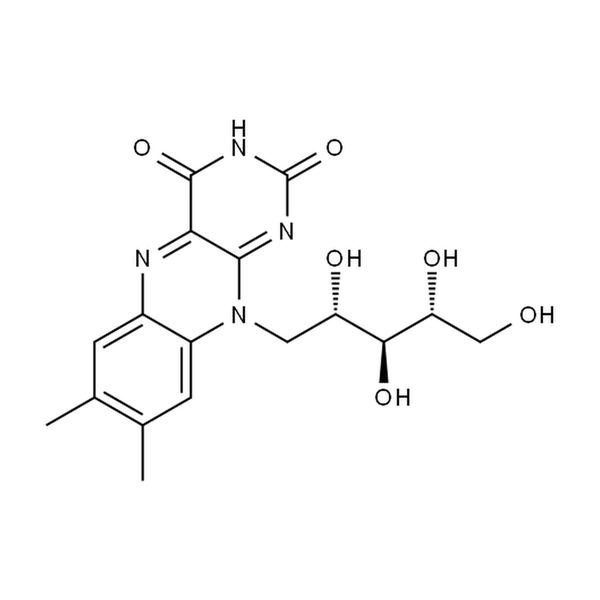
Vitamin B2 (Riboflavin) (CAS: 83-88-5)

Riboflavin CAS 83-88-5 Bulk Supplier

Model:VTM-99
Riboflavin is a yellow-green fluorescent isoalloxazine that dissolves only slightly in water, about 0.07 g/L, but readily in alkali. It serves as both a vitamin and a permitted food colour (E101), and it is degraded faster by light than almost any other vitamin.
  • VTM-99:

    Product Name: Vitamin B2 (Riboflavin) CAS No.: 83-88-5 Molecular Formula: C17H20N4O6 Molecular Weight: 376.36 g/mol Appearance: Yellow to orange/yellow crystalline powd Product Form: Crystalline solid Assay: ≥ 99.0% Melting Point: 290.0 °C Solubility: Very slightly soluble in water, practically insoluble in ethanol (96 per cent). Solutions deteriorate on exposure to light, especially in the presence of alkali. It shows polymorphism (5.9); water solubility 0.07 g/L (20 °C) Grade Standard: USP / FCC / EP monograph HS Code: 29362300 Storage: Store below 25 °C in the dark in sealed containers; light exposure degrades both colour and assay. Packaging: 25 kg net (fibre drum with double PE liner) or as required Documentation: COA, TDS, MSDS and regulatory support available on request

Vitamin B2 (Riboflavin)

Product Overview

Riboflavin is a yellow-green fluorescent isoalloxazine that dissolves only slightly in water, about 0.07 g/L, but readily in alkali. It serves as both a vitamin and a permitted food colour (E101), and it is degraded faster by light than almost any other vitamin.

Specification

Product NameVitamin B2 (Riboflavin)
CAS No.83-88-5
Molecular FormulaC17H20N4O6
Molecular Weight376.36 g/mol
AppearanceYellow to orange/yellow crystalline powd
Product FormCrystalline solid
Assay≥ 99.0%
Melting Point290.0 °C
SolubilityVery slightly soluble in water, practically insoluble in ethanol (96 per cent). Solutions deteriorate on exposure to light, especially in the presence of alkali. It shows polymorphism (5.9); water solubility 0.07 g/L (20 °C)
Grade StandardUSP / FCC / EP monograph
HS Code29362300
StorageStore below 25 °C in the dark in sealed containers; light exposure degrades both colour and assay.
Packaging25 kg net (fibre drum with double PE liner) or as required
DocumentationCOA, TDS, MSDS and regulatory support available on request

Grade Highlights

  • Light is the limiting factor: Aqueous solutions lose potency within hours in daylight; opaque or amber packaging and light-shielded processing are not optional for this molecule.
  • Feed grade versus pharmacopoeial: Spray-dried 80% feed grade on carrier for premix flow, or 98% crystalline for tablets and food fortification.
  • Colour value as a functional bonus: The same yellow that makes it a vitamin makes it E101, so it can colour a product while it fortifies it.
  • Related substances by HPLC: Lumiflavin and other photodegradants are controlled, since they are the visible sign of a lot that has seen too much light.

Typical Applications

  • Supplements: B-complex tablets and capsules, usually 98% crystalline grade.
  • Feed premix: 80% spray-dried grade for poultry, swine and aquafeed.
  • Food colour and fortification: E101 in dairy, sauces, cereals and dessert mixes.
  • Pharmaceuticals: Tablets and injections, where the 5-phosphate salt is used for solubility.

Formulation & Handling Notes

For clear beverages riboflavin-5-phosphate sodium is used instead, because the free riboflavin will not dissolve enough and gives a green fluorescence that most formulators do not want.

Market Supply & Sourcing

Riboflavin is a fermentation product made by a few global players in Europe and China, and feed premix absorbs most of the volume. Corn and energy costs drive the fermentation economics, while the 80% spray-dried grade is priced on carrier and process rather than on riboflavin content alone.

Frequently Asked Questions

Which specification does your Vitamin B2 (Riboflavin) meet?

Material is released to USP / FCC / EP monograph, with the assay and product-specific parameters stated on every COA, including light is the limiting factor.

Can Vitamin B2 (Riboflavin) be used in supplements?

B-complex tablets and capsules, usually 98% crystalline grade.

What storage conditions does Vitamin B2 (Riboflavin) need?

Store below 25 °C in the dark in sealed containers; light exposure degrades both colour and assay.

Supply, Documentation & Packaging

Packed from 25 kg in double PE-lined fibre drums and shipped from Shanghai / Ningbo / Qingdao within 7-15 working days after PO. Every lot is released against USP / FCC / EP monograph with a batch-specific COA, TDS and MSDS. superpharmagroup supplies this product as a bulk raw material only; it does not manufacture or sell finished dosage forms. GMP, ISO 9001, ISO 14001, CEP/DMF support documentation available on request.

Related raw materials our buyers source together

Vitamin B12 (Cyanocobalamin) (CAS 68-19-9) · Vitamin B3 (Niacin) (CAS 59-67-6) · Vitamin B5 (D-Pantothenic Acid) (CAS 79-83-4) · Vitamin B6 (Pyridoxine HCl) (CAS 58-56-0) · Vitamin C (Ascorbic Acid) (CAS 50-81-7) · Taurine (CAS 107-35-7). Specification sheets, COA and samples for any of these grades can be requested on the same inquiry.

Application guide: Infant formula ingredients

Send Inquiry
Contact Info

address

EU Warehouse
NA Warehouse

whatsapp

Please click the WhatsApp link.

Email

Please click the WhatsApp link.

Telegram

Please click the WhatsApp link.

X
We use cookies to offer you a better browsing experience, analyze site traffic and personalize content. By using this site, you agree to our use of cookies. Privacy Policy
RejectAccept