News

Growth Hormone Peptides in 2026: Purity Basis, Salt Form and Why Buyers Are Consolidating Suppliers

2026-11-26 0 Leave me a message

GLP-1 has absorbed almost all of the attention in the peptide raw-material market over the past two years, and for good reason. But while everybody stares at the incretin side, a smaller and quieter segment has been restructuring: the growth-hormone axis, meaning the GHRH analogues and the ghrelin-receptor agonists. Buyers who used to run four or five small suppliers in parallel are now narrowing to one or two, and the reason is not price. It is that at this scale, comparability between suppliers is the expensive part.

Four molecules, one receptor axis, four different half-life strategies

The GH-axis peptides are frequently grouped together in catalogues, which hides the fact that they are engineered for entirely different pharmacokinetic behaviour. The grouping is therapeutic, not chemical.

Sermorelin is the shortest and the oldest idea: the first 29 amino acids of endogenous GHRH, amidated at the C-terminus, CAS 86168-78-7. It is fully bio-identical to the GHRH fragment and therefore the most straightforward to defend in a regulatory file, but it is also the most fragile — the sequence is cleaved quickly in plasma, so its action window is measured in minutes rather than hours.

Tesamorelin keeps the GHRH backbone and extends it to the full 44 residues, with a trans-3-hexenoyl group on the N-terminus, CAS 218949-48-5. That single modification blocks the main site of enzymatic attack and lengthens the circulating window by roughly an order of magnitude compared with sermorelin. It is the version of this axis that has an approved-drug reference behind it, which is why buyers ask for it by name.

CJC-1295 takes a different route to the same problem. It is a tetrasubstituted modification of GRF(1-29) — four substitutions that resist DPP-4 — and in the DAC form it carries a maleimidopropionic acid linker that binds covalently to serum albumin. Albumin binding is what turns a minutes-scale peptide into a days-scale one. The no-DAC version is essentially the same modified backbone without the linker, so it behaves like a conventional short-window GHRH analogue. Confusingly, both are sold under the CJC-1295 name, and this is the single most common source of mismatched expectations in the segment: the buyer specifies a half-life in conversation and a name on the purchase order, and the two do not always refer to the same molecule.

Ipamorelin is not a GHRH analogue at all but a pentapeptide ghrelin-receptor agonist, CAS 170851-70-4, sequence Aib-His-D-2Nal-D-Phe-Lys-NH2. Its commercial appeal is selectivity: the earlier generation of GHRP peptides moved cortisol, prolactin and appetite alongside GH, while ipamorelin was designed to minimise that spillover. That selectivity is why it is routinely paired with a GHRH analogue — two different receptors, two different signalling routes into the same somatotroph cell.

Why the same purity number can mean two different products

Ask four suppliers for CJC-1295 at 98% and you will receive four certificates that all read 98%. They are not interchangeable, and the gap is almost never in the HPLC column — it is in what the number is a percentage of.

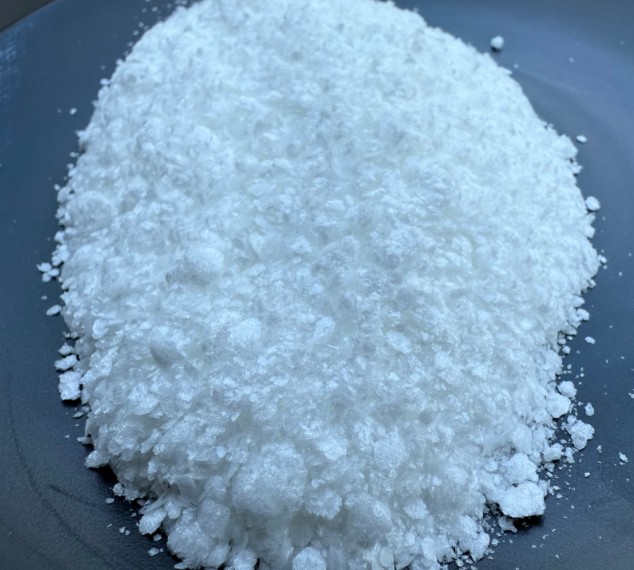
Area percent versus net peptide content. Purity by HPLC is an area normalisation: it says how much of the UV-absorbing material is the target peak. It says nothing about how much of the powder is peptide. A lyophilised lot can be 98.5% pure by area and still contain only 78% peptide by mass once counter-ion, water and residual trifluoroacetate are accounted for. If you dose or cost your product per milligram of powder, that 20-point gap is your entire margin.

Salt form and counter-ion. Peptides leave reverse-phase purification carrying trifluoroacetate. For research work that is often tolerated; for anything touching cells it is not, because TFA is cytotoxic at the concentrations that arrive with the peptide. Acetate exchange adds a process step, which is why acetate-grade material costs more per gram and why some quotes quietly revert to TFA salt. The certificate should state the counter-ion and, ideally, the residual TFA figure.

Water content. Lyophilised peptide is hygroscopic. A cake that picked up moisture during vial filling loses labelled content before it ships, and it also aggregates faster in storage. Karl Fischer water content belongs on the COA next to the purity line, not in an email after the fact.

The documentation chain is the real differentiator

DocumentWhat it should proveWhat buyers actually check
HPLC chromatogramPurity and impurity profile of the batchRetention time, shoulder peaks, whether the trace is the batch in question
LC-MS / mass specIdentity: observed mass matches theoreticalMonoisotopic mass for the stated sequence, not just “conforms”
Peptide content assayNet peptide per mg of powderThe figure that converts a purity number into a real quantity
Amino acid analysisComposition matches the sequenceRatios for the unusual residues (Aib, D-2Nal) that LC-MS can hide
Water content (KF)Storage stability and content accuracyAnything above roughly 5% invites a re-test before release
Residual solvents / TFAProcess cleanliness and cell compatibilityAcetate versus TFA salt is stated explicitly
EndotoxinSuitability for cell-based workRequested only by buyers who know to ask — which is the point

The operational shift behind the consolidation

Three practical changes are driving buyers towards fewer, larger relationships rather than a long tail of small ones.

Batch sizes are small, so qualification costs dominate. A GH-axis peptide moves in grams, not tonnes. The analytical package costs about the same whether the batch is 5 g or 50 g, so the supplier who can deliver a consistent 50 g lot with one qualification cycle beats three cheap 5 g lots that each need re-testing.

Custom vialling is now part of the product. A large share of demand is not bulk powder but filled, lyophilised vials with customer labelling. That moves the requirement from “can you synthesise it” to “can you fill it reproducibly, with a fill-weight distribution and a stability story” — a different capability, and one that most trading intermediaries cannot offer at all.

Sequence-level questions are getting harder. Modified residues — Aib, D-2Nal, the hexenoyl cap, the albumin linker — are exactly the positions where a generic certificate of analysis stops being informative. Suppliers who synthesise in-house can answer “what is the diastereomer content at the D-2Nal position”. Suppliers who broker cannot.

Where this sits next to the incretin business

It is worth being clear that these are two different markets with two different buying behaviours. The GLP-1 side — semaglutide, tirzepatide, retatrutide — is driven by metabolic programmes at a scale the GH axis will never reach, and it carries the regulatory scrutiny to match. The GH axis is smaller, older, more fragmented and far more dependent on documentation quality than on volume. Many of our customers run both, and the failure mode is the same in each case: treating a peptide as a commodity because the certificate looks like every other certificate.

There is also a topical branch that behaves differently again. Cosmetic peptides such as copper tripeptide-1 are sold on entirely different specifications — appearance, solubility, preservative compatibility and formulation stability matter more than plasma half-life. We keep that range separate under cosmetic peptides precisely because the buyer and the COA are not the same as for an injectable-grade API.

What to put in the specification

  • Sequence written out, with modifications and the C-terminal amide stated explicitly.
  • Purity by HPLC with the method and wavelength named, plus a minimum net peptide content.
  • Counter-ion stated (acetate or TFA) with a residual TFA limit if the material touches cells.
  • Water content limit and storage instruction (−20 °C, protected from light, desiccated).
  • Identity by LC-MS against theoretical monoisotopic mass.
  • A retained sample and a re-test period, in writing.

None of these lines is exotic. The point is that a quote which cannot answer them is not a cheaper quote — it is a quote for a different product.

Sourcing note

We synthesise sermorelin acetate, tesamorelin acetate, CJC-1295 (DAC and no-DAC) and ipamorelin by solid-phase synthesis at ≥98% HPLC, supplied as bulk lyophilised powder or as custom-filled vials, with COA, HPLC trace, MS, SDS and GMP documentation issued per batch. If you are consolidating a supplier list and want to benchmark an incumbent lot, send us the certificate you currently hold — we will tell you which lines are missing rather than simply quoting a lower number. Samples and specification sheets are available through our inquiry form.

Related News
Leave me a message
X
We use cookies to offer you a better browsing experience, analyze site traffic and personalize content. By using this site, you agree to our use of cookies. Privacy Policy
RejectAccept